Easy Miso Soup Recipe- Quick & Flavorful Comfort
Miso Soup Recipe: Embark on a journey to a place of comfort and warmth with this incredibly simple yet profoundly satisfying miso soup recipe. There’s a reason why this humble broth holds such a cherished spot in Japanese cuisine and in the hearts of so many worldwide. It’s more than just soup; it’s a bowl brimming with umami-rich goodness, a gentle hug for your senses, and a culinary cornerstone that can be both a light starter or a nourishing meal on its own. What truly sets this miso soup apart is its incredible versatility and the depth of flavor achieved with just a few key ingredients. We’ll dive into creating that signature savory profile that makes this dish so utterly addictive, proving that a truly exceptional meal doesn’t need to be complicated. Get ready to discover your new go-to comfort food.
Miso Soup Recipe
Miso soup, a cornerstone of Japanese cuisine, is more than just a side dish; it’s a comforting bowl of umami-rich goodness that can be both deeply satisfying and incredibly simple to prepare. For those new to Japanese cooking, miso soup is often the gateway ingredient, introducing a world of savory flavors through fermented soybean paste. What makes it truly special is its versatility. While this recipe focuses on a classic preparation, you can easily adapt it with other vegetables, proteins, or even different types of miso. This recipe is designed to be quick, so you can enjoy a warm, nourishing bowl in just a few minutes, perfect for a light breakfast, a prelude to a larger meal, or a comforting pick-me-up any time of day.
Ingredients:
Cooking Instructions:
Let’s get started on this simple yet incredibly rewarding miso soup. The beauty of this recipe lies in its minimal ingredients and quick preparation time. We’ll start by rehydrating our seaweed, which will add a wonderful texture and ocean-kissed flavor to the soup.
Step 1: Prepare the Dashi and Seaweed
Begin extract by gently heating your dashi in a medium saucepan over medium heat. You want it to be warm, not boiling. While the dashi is warming, take your dried seaweed and place it in a small bowl. Pour a little warm water over the seaweed and let it sit for about 5-10 minutes. It will expand significantly and soften. Once rehydrated, drain off any excess water and gently squeeze out any remaining liquid. If the seaweed pieces are very large, you can chop them into smaller, more manageable sizes. This step ensures the seaweed is tender and pleasant to eat.
Step 2: Add the Tofu and Seaweed to the Dashi
Once your dashi is warm and your seaweed is ready, carefully add the rehydrated seaweed to the saucepan. Then, gently add the silken tofu pieces. Be delicate with the tofu; silken tofu is quite soft and can break apart easily. Stir very gently to distribute the tofu and seaweed throughout the dashi. Allow this mixture to simmer gently for about 3-5 minutes. This simmering time allows the flavors of the seaweed and tofu to meld with the dashi, creating a more complex base for our miso soup. Don’t let it boil vigorously, as this can affect the delicate texture of the tofu.
Step 3: Incorporate the Miso Paste
This is perhaps the most crucial step in making delicious miso soup. Miso paste is a fermented product, and boiling it can destroy its beneficial probiotics and its delicate, nuanced flavor. To avoid this, we’re going to temper the miso. Ladle about ½ cup of the warm dashi from the saucepan into a small bowl. Add your miso paste to this bowl. Now, using a whisk or a fork, stir the miso paste into the warm dashi until it’s completely dissolved and smooth. This process ensures that the miso is evenly distributed throughout the soup without clumping.
Step 4: Combine and Finish the Soup
Once your miso paste is fully dissolved in the small bowl, carefully pour this miso mixture back into the main saucepan with the dashi, tofu, and seaweed. Stir gently to combine. Now, you will bring the soup up to a very gentle simmer. Crucially, do not let the soup boil after adding the miso. You just want to heat it through until it’s steaming hot. This ensures that the miso flavor remains vibrant and its health benefits are preserved. Taste the soup at this point and adjust the miso amount if needed. Some people prefer a more intense miso flavor, while others like it more subtle. Adding more miso paste at this stage is perfectly acceptable to achieve your desired taste.
Step 5: Serve and Garnish
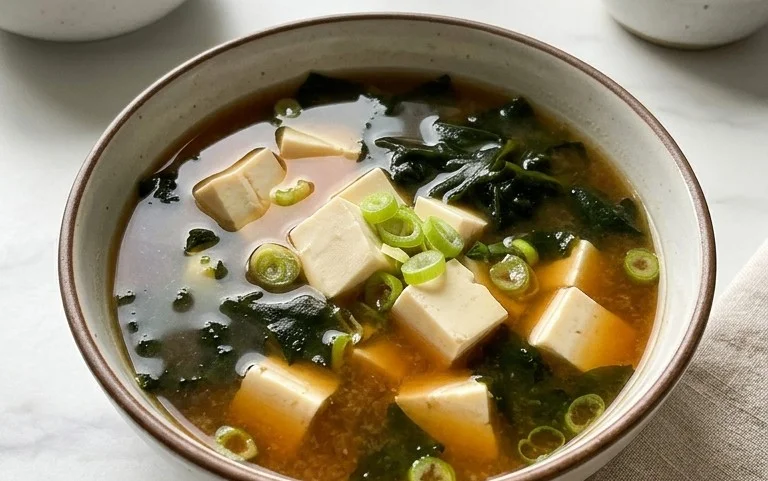
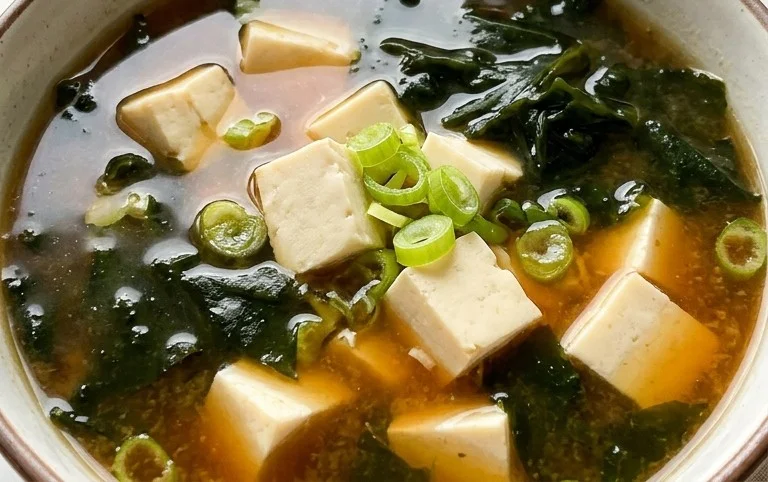
Once the miso soup has reached your desired temperature and flavor, it’s ready to serve. Ladle the hot soup into individual bowls, making sure each bowl gets a good distribution of tofu and seaweed. The final touch is the fresh scallion. Sprinkle the chopped scallions over the top of each bowl just before serving. The vibrant green of the scallions adds a lovely pop of color and a fresh, oniony bite that complements the savory depth of the miso beautifully. Serve immediately and savor the warmth and comfort of your homemade miso soup. It’s a simple pleasure that can elevate any meal.
Conclusion:
And there you have it – a simple yet incredibly satisfying Miso Soup recipe that’s perfect for any occasion. This recipe is truly wonderful because it’s so quick to prepare, allowing you to enjoy a comforting and flavorful bowl in mere minutes. The delicate umami of the miso paste, combined with the subtle dashi broth, creates a deeply nourishing and delicious experience that’s both warming and revitalizing. It’s the perfect starter for a Japanese meal, a light lunch, or even a late-night snack.
Feel free to get creative with your serving suggestions! I love to top my miso soup with fresh scallions for a bright, peppery crunch, or a drizzle of sesame oil for an extra layer of nutty aroma. For a heartier meal, consider adding silken tofu cubes, shiitake mushrooms, or even some blanched spinach. If you’re feeling adventurous, try experimenting with different types of miso paste. White miso (shiro miso) offers a milder, sweeter flavor, while red miso (aka miso) provides a richer, more robust taste. Don’t be afraid to adjust the amount of miso to suit your personal preference – it’s all about creating your perfect bowl of miso soup.
I truly encourage you to give this Miso Soup recipe a try. It’s a fantastic gateway into Japanese cuisine and incredibly rewarding to make at home. You’ll be amazed at how such simple ingredients can create such a profound and comforting flavor. Enjoy the process, and savor every sip!
Frequently Asked Questions:
What is dashi, and can I make it?
Dashi is the foundational broth for many Japanese dishes, including miso soup. It’s typically made by simmering kombu (dried kelp) and katsuobushi (dried bonito flakes) in water. You can buy dashi powder or granules at most Asian grocery stores for a quick and easy option, or you can make it from scratch for a more authentic flavor. The recipe article touches on this, but feel free to explore dashi-making further if you’re curious!
Can I make miso soup vegetarian or vegan?
Absolutely! For a vegetarian version, simply omit the katsuobushi from the dashi. For a vegan miso soup, ensure you use kombu-only dashi or a vegetable-based dashi, and of course, avoid any animal products in your additions like tofu or mushrooms.
Miso Soup
A simple and comforting miso soup recipe, perfect for a quick meal or side dish.
Ingredients
-
2½ cups Dashi
-
1 heaping tablespoon dried seaweed
-
4 oz silken tofu (cut into small pieces)
-
2-2½ tablespoons miso paste (or to taste)
-
1 tablespoon scallion (chopped)
Instructions
-
Step 1
Soak the dried seaweed in a small bowl of water for about 5 minutes until rehydrated. Drain well and chop if desired. -
Step 2
In a medium saucepan, bring the Dashi to a gentle simmer over medium heat. -
Step 3
Add the rehydrated seaweed and silken tofu to the simmering Dashi. Cook for 1-2 minutes until heated through. -
Step 4
In a small bowl, whisk the miso paste with a ladleful of the hot Dashi until smooth. This prevents the miso from clumping. -
Step 5
Gently stir the dissolved miso paste mixture back into the saucepan. Do not boil after adding miso, as it can alter the flavor and nutrients. -
Step 6
Ladle the soup into bowls and garnish with chopped scallions just before serving.
Important Information
Nutrition Facts (Per Serving)
It is important to consider this information as approximate and not to use it as definitive health advice.
Allergy Information
Please check ingredients for potential allergens and consult a health professional if in doubt.