Easy French Macaron Recipe – Perfect Delights
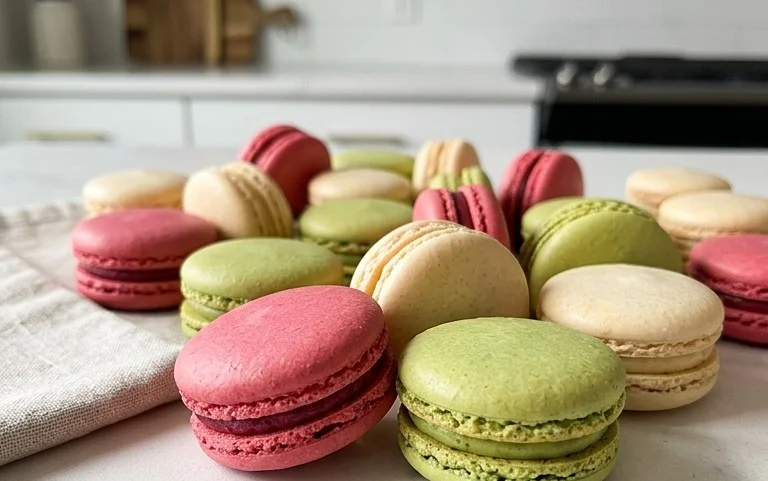
French macarons are tiny bites of pure bliss, aren’t they? That delicate, crisp shell giving way to a chewy interior, all sandwiched together with a luscious ganache or buttercream – it’s a symphony of textures and flavors that has captured hearts (and taste buds!) worldwide. For me, mastering the French macaron has always felt like unlocking a little piece of patisserie magic. The reason they’re so beloved is undoubtedly their elegant appearance and sophisticated taste. But what truly makes the French macaron special isn’t just its deliciousness; it’s the artistry involved. Achieving those perfectly smooth shells, those coveted “feet” that rise gracefully from the base, and those vibrant colors requires patience and precision, but the reward is a confection that feels both celebratory and incredibly chic. Today, I’m so excited to share my foolproof guide to creating your own exquisite French macarons right in your own kitchen!
French Macaron Recipe
Ah, the French macaron. A delicate, airy, and utterly delightful cookie that looks as beautiful as it tastes. Many bakers are intimidated by them, thinking they’re incredibly difficult to master. While they do require precision and a bit of practice, with the right guidance and a touch of patience, you can absolutely achieve those perfectly smooth shells and delightful fillings. Today, I’m going to walk you through a classic French macaron recipe that will have you feeling like a patisserie pro in no time. Get ready to impress yourself and everyone around you!
Ingredients:
The Art of Preparation: Dry Ingredients and Egg Whites
The foundation of a great macaron lies in meticulous preparation. Before we even think about mixing, let’s get our dry ingredients ready. Sifting is absolutely crucial here. It removes any lumps and ensures that your almond flour and powdered sugar are as fine as possible. This leads to incredibly smooth macaron shells. For the almond flour, I like to weigh it after sifting. This is a little trick that ensures accuracy. If you sift first and then weigh, you might end up with a slightly different amount depending on how much the flour compacts. So, measure your almond flour, sift it, and then measure again to ensure you have exactly 150 grams. Then, sift the powdered sugar with the salt. Combine these two sifted mixtures in a bowl and set aside.
Now, let’s talk about the egg whites. Room temperature egg whites are essential for achieving the right meringue consistency. Cold egg whites won’t whip up as well. You can leave your egg whites out on the counter for about an hour, or gently warm them by placing the bowl over a pot of simmering water (a double boiler method) for a few minutes, stirring constantly until they reach about 100°F (38°C). Be careful not to cook them! Once at room temperature, weigh out precisely 120 grams. It’s best to use egg whites that have been aged in the refrigerator for a day or two. This process removes some moisture, which helps create a more stable meringue. You can do this by separating your eggs, placing the whites in a clean, dry container, covering it loosely with plastic wrap (poke a few holes), and refrigerating for 24-48 hours.
Crafting the Meringue: The Key to Lightness
This is where the magic truly happens – creating a stable and glossy meringue. In a clean, dry bowl of your stand mixer (or using a hand mixer), begin extract to whip the room-temperature egg whites on medium-low speed. Once they become foamy, gradually add the granulated sugar, a tablespoon at a time, while the mixer is still running. Increase the speed to medium-high and continue to whip. You’re looking for a glossy, stiff-peak meringue. This means when you lift the whisk attachment, the meringue should stand up straight without drooping. It should look like a shiny, fluffy cloud. If you can rub a little bit of the meringue between your fingers and feel no sugar grit, you’re on the right track. This usually takes about 8-10 minutes.
Once you have stiff peaks, it’s time to incorporate the color and flavor. Add your liquid-gel food coloring and vanilla extract. Start with the recommended amount and add more if you desire a more vibrant hue. Mix on low speed until the color is evenly distributed. Be careful not to overmix at this stage, as it can deflate the meringue. The meringue should still be firm and hold its shape.
The Macaronage: Folding with Precision
This step, known as “macaronage,” is critical for achieving the characteristic smooth, flowing batter. Gently add about one-third of your dry ingredient mixture (almond flour, powdered sugar, and salt) to the meringue. Using a rubber spatula, fold the dry ingredients into the meringue. Use a motion that scrapes down the sides of the bowl and then folds the batter over on itself. It’s important to be gentle but thorough. Once that’s incorporated, add the remaining dry ingredients in two more additions, continuing the folding process.
The goal is to achieve a batter that flows like lava. When you lift the spatula, the batter should fall in a thick ribbon, and this ribbon should slowly melt back into the rest of the batter within about 20-30 seconds. If the batter is too stiff, your macarons will be lumpy and may crack. If it’s too runny, they’ll spread too much and won’t develop their characteristic feet. Don’t be afraid to fold a little more or a little less depending on how your batter is behaving. It’s a feel you develop with practice, so don’t get discouraged if your first attempt isn’t perfect!
Piping and Resting: Setting the Stage for Success
Now it’s time to transfer the batter into a piping bag fitted with a plain, round tip (about 1/2 inch). Line baking sheets with parchment paper or silicone baking mats. If using parchment paper, you can draw circles on the underside as guides for consistent size. Hold the piping bag perpendicular to the baking sheet and pipe small, uniform rounds of batter. Stop piping when the edges start to meet. Give the baking sheet a firm tap on the counter a few times. This helps to release any air bubbles trapped in the batter and also encourages the macarons to spread into smooth discs. You can use a toothpick to pop any remaining visible air bubbles.
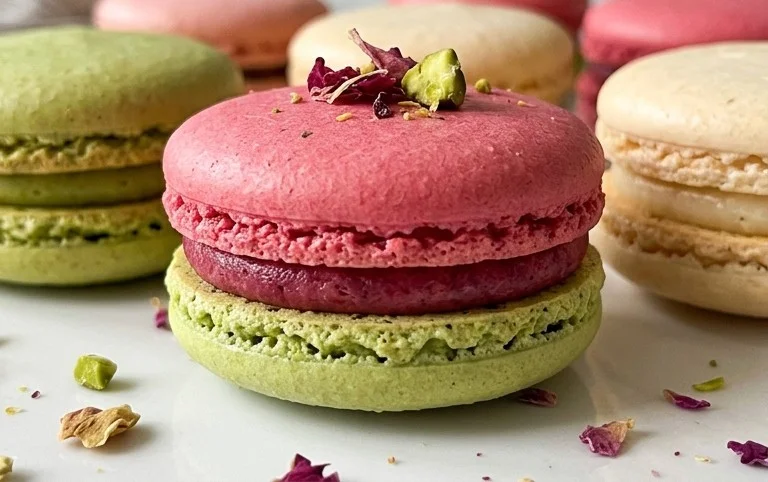
After piping, it’s crucial to let the macarons rest at room temperature. This resting period allows a skin to form on the surface of the piped cookies. The time this takes can vary depending on the humidity of your kitchen, but it generally takes anywhere from 30 minutes to an hour, or even longer. You’ll know they’re ready when you can gently touch the surface of a macaron and it doesn’t stick to your finger. This skin is essential for the “feet” – the ruffled edge that forms at the base of the macaron during baking.
Baking and Filling: The Grand Finnon-alcoholic ale
Preheat your oven to 300°F (150°C). Once the macarons have rested and formed a skin, it’s time to bake. Carefully slide the baking sheets into the preheated oven. Bake for approximately 12-15 minutes. The exact baking time will depend on your oven, so keep an eye on them. You’ll know they’re done when the tops look set and don’t wobble when you gently touch them. The feet should be nicely developed.
Once baked, remove the baking sheets from the oven and let the macarons cool on the sheets for about 5-10 minutes before carefully transferring them to a wire rack to cool completely. Once fully cooled, it’s time to fill them! Pair up your macaron shells by size. Pipe a generous amount of your chosen filling (vanilla buttercream is a classic, but raspberry jam, chocolate ganache, or lemon curd are also delicious) onto the flat side of one shell, and then gently sandwich it with another shell. For the best flavor and texture, it’s highly recommended to let your filled macarons mature in an airtight container in the refrigerator for at least 24 hours. This allows the flavors to meld and the shells to soften slightly, creating that perfect chewy interior. Enjoy your homemade French macarons!
Conclusion:
Making French macarons at home might seem daunting, but with this recipe and a little patience, you’ll be rewarded with those iconic, delicate, and utterly delicious meringue cookies. The beauty of this French macaron recipe lies in its ability to produce a truly authentic taste and texture – a crisp exterior giving way to a soft, chewy interior, all perfectly complemented by your chosen filling. They are truly a labor of love, but the result is undeniably impressive and incredibly satisfying.
These elegant treats are perfect for any occasion, from sophisticated dinner parties to a simple afternoon tea. Imagin extracte presenting a platter of perfectly piped macarons – they are sure to be a showstopper! For serving suggestions, consider pairing them with coffee, tea, or even cbeef hampagne for a celebratory touch. Don’t be afraid to experiment with fillings! Beyond the classic ganache or buttercream, try a fruit curd, a cream cheese frosting, or even a salted caramel. The possibilities for flavor combinations are endless, allowing you to personalize your macarons.
So, I truly encourage you to give this French macaron recipe a try. Embrace the process, learn from each batch, and celebrate your successes. You’ll find the journey of creating these exquisite cookies incredibly rewarding, and the taste will speak for itself!
Frequently Asked Questions:
Why are my French macarons cracked on top?
Cracked macarons often happen due to oven temperature being too high, or the meringue not being whipped to stiff peaks. Ensure your oven is accurately calibrated and that your meringue forms glossy, stiff peaks that hold their shape when the whisk is lifted. Also, make sure you are letting the macarons “rest” or form a skin before baking – this helps prevent cracking.
What’s the best way to store French macarons?
Proper storage is key to maintaining their texture. Once filled, store your French macarons in an airtight container in the refrigerator. They are often best enjoyed after a day or two in the fridge, as this allows the filling to meld with the shells, softening them slightly to that perfect chewy consistency. They can also be frozen for longer storage, layered between parchment paper within an airtight container.
French Macaron Recipe
A classic French macaron recipe for delicate, chewy cookies with a crisp shell. Customize with your favorite filling.
Ingredients
-
150 grams sifted super-fine almond flour
-
180 grams powdered sugar
-
1/4 teaspoon salt
-
120 grams large egg whites (at room temperature)
-
60 grams granulated sugar
-
4 drops liquid-gel food coloring
-
1 teaspoon pure vanilla extract
-
Vanilla Buttercream Frosting (or your choice of filling)
Instructions
-
Step 1
Whisk together sifted almond flour, powdered sugar, and salt in a medium bowl. Set aside. -
Step 2
In a clean, grease-free bowl, whip egg whites until frothy. Gradually add granulated sugar, whipping until stiff, glossy peaks form. -
Step 3
Add food coloring and vanilla extract to the meringue. Gently fold in the dry ingredients in two additions until a smooth, lava-like batter forms (macaronage). -
Step 4
Pipe small, uniform rounds onto baking sheets lined with parchment paper or silicone mats. -
Step 5
Tap the baking sheets firmly on the counter to release air bubbles. Let macarons sit at room temperature for 30-60 minutes until a skin forms. -
Step 6
Bake in a preheated oven at 300°F (150°C) for 12-15 minutes, or until the macarons are set and have developed ‘feet’. -
Step 7
Let macarons cool completely on the baking sheets before gently removing them. Pair matching shells and fill with your chosen frosting.
Important Information
Nutrition Facts (Per Serving)
It is important to consider this information as approximate and not to use it as definitive health advice.
Allergy Information
Please check ingredients for potential allergens and consult a health professional if in doubt.